Strategies for managing the nervous system that can help us deal with anxiety, overthinking, emotional flooding, and being overwhelmed.
Register now! →Future Session Interest Form →
5:00PM PDT - 6:30PM PDT (Pacific Daylight Time)
Time zone friendly for folks in the Americas, Australia/NZ, Asia and the Pacific
Time Zone Converter
2026
Part I: April 28th, May 5th, May 12th, May 19th
Part II: June 9th, June 16th, June 23rd, June 30th
Part III: July 7th, July 14th, July 21st, July 28th
***No class May 26th & June 2nd***
Continuing Education Credits
Live:
APA, NYS, ASWB, NBCC, CPD, & YACEP
*Closed Captioning is now available during the live sessions.
Can't make it?
All live lectures are recorded and made available within 48 hours after the live lecture. Recordings are available for 365 days after the last class.
Want to stay up to date?
Join our mailing list to be notified!

Experiencing trauma can cause us to respond by entering into a state of survival. Even after the traumatic event or events have ended, we may find that the actions of truncated survival become integrated into the nervous system and can lead to long-term side effects on the body. Eventually, the strategies that kept us alive can keep us from fully living.
In this three part, 12-session certification course, you will learn to recognize and safely resource the tension patterns of these survival responses. This course provides strategies for managing the nervous system that can help us deal with anxiety, overthinking, emotional flooding, and being overwhelmed.
As we develop an understanding of how to regulate the nervous system through various strategies, new choices become available for the neuro-muscular system, which can allow us to cultivate self-awareness around past behaviors, thoughts, and emotions. This gives us the opportunity to bring the nervous system's functionality back online so we can fully embrace life.
WHAT YOU WILL LEARN
This somatic training program is designed for individuals seeking a deep understanding of the nervous system’s role in trauma, attachment, and healing. Through a three-part curriculum, participants will develop both theoretical knowledge and practical skills to support nervous system regulation, embodied resilience, and integrative healing.
Part 1: Foundations of Somatic Trauma Work
Part 1 establishes the theoretical framework for understanding trauma’s impact on the autonomic nervous system, attachment systems, and psychological well-being. Participants will explore neuroception, survival responses, and the critical role of co-regulation, with a special focus on the intersection of somatics, trauma, and social justice.
Part 2: Somatic Tools for Nervous System Regulation
Building upon the foundational knowledge, Level 2 introduces bottom-up (somatic), brain-based and body-based techniques for resourcing the nervous system. Participants will learn practical somatic interventions for orienting, working with dissociativeness and dorsal vagal dissociation, and integrating sensory processing to support self- and co-regulation in healing.
Part 3: Somatic Psychotherapy and Developmental Attachment Repair
The final level delves into the neuromuscular-skeletal imprint of disrupted attachment and early relational trauma. Through an exploration of developmental movements, character structures, and survival adaptations, participants will gain tools to support clients in reclaiming their attachment needs, voice, and capacity for embodied connection.
This training is ideal for therapists, bodyworkers, and healing practitioners seeking a nuanced and embodied approach to trauma-informed care.
A recording of the live class (if you aren’t able to attend live).
A recording of the Q&A (if you aren’t able to attend live).
Linda’s powerpoints - for those of us who are visual learners - include a comprehensive resource and reference list.
Relevant and up-to-date supplemental materials that may include: videos for you to practice somatic techniques, research articles, resource lists for specific areas of curiosity.
Part l
The emphasis of Level 1 is to lay the foundational theoretical framework of the impact of trauma upon the nervous system, psyche, and attachment systems.
This class examines how stored trauma dysregulates the autonomic nervous system, shaping survival responses, health outcomes, and psychological diagnoses.
Identify the six main trauma survival strategies.
Utilize a non-pathologizing lens in conceptualizing adaptive, proactive responses to potential stress.
Understand the relationship between traumatic stress and health outcomes and potential DSM diagnoses.
Utilize the Window of Tolerance in conceptualizing nervous system regulation.
This class explores how autonomic nervous system states shape perception and behavior, offering insights into regulation, dissociation, and integrative healing.
Identify the three main branches of the autonomic nervous system.
Identify the three blended autonomic nervous system states.
Identify common autonomic nervous system loops.
Understand how the state of your nervous system drives your story about the world.
Combine Structural Dissociation of the Personality Theory with Parts Work and Trauma Responses.
This class examines the neurobiological necessity of co-regulation, its role in the social engagement system, and the impact of trauma on relational safety and survival strategies.
Describe the role of the polyvagal theory in shaping attachment and regulation.
Identify cranial nerves involved in the social engagement system.
Differentiate between co-regulation and self-regulation in caregiving contexts.
Explain how early attachment experiences influence adult regulation capacities.
Recognize the importance of contextualizing behaviours as survival strategies.
We unpack the intersection of somatics, trauma, power, and social justice.
Define neuroception
Identify the distinction between fawning, appeasement, freeze, and dorsal vagal shutdown.
Identify the dynamics of domination and subordination that are inherent in all forms of traumas.
Recognize the impacts of historical, systemic, structural, institutional trauma on the present day.
Recognize the imperative of engaging in therapy from an approach that recognizes the longitudinal, structural impact of ideologies and systems of oppression upon clients.
Part ll
The emphasis level 2 is to learn bottom-up (somatic) techniques for resourcing the nervous system.
This class explores the distinction between safety and felt safeness, exploring orienting, fidgeting, and intellectual defenses as adaptive strategies for nervous system regulation.
Differentiate between orienting, find, and fidget, and fidgeting responses of the nervous system as indicators of autonomic nervous system arousal.
Evaluate how Zoom and virtual environments impact relational safety, and explore virtual techniques to establish relationality.
Apply ocular release and orienting practices to foster safety, reinstate safety, and to reset the vagus nerve.
Explain the Find response as a pleasurable evolutionary adaptive drive that goes haywire due to stress-distress-trauma.
Releasing anxiousness through the fidgeting responses
This class explores dissociativeness and dorsal vagal dissociation, offering breath and somatic techniques to support self-regulation, co-regulation, and reconnect with vitality.
Breathing techniques for regulation, contextualizing breathwork for trauma, mouth-breathing vs nose-breathing.
Resource the truncated attachment cry response.
Re-frame dissociation as a protective, not a defective, response.
Demonstrate multiple techniques for how to help someone who is experiencing an increase in low-grade dorsal vagal energy.
Demonstrate how to help someone to come out of a dorsal vagal response.
Regulating resources for dorsal energy
This class explores the sensory patterns that exist at the confluence of trauma and neurodivergence, provides nuance in our healing approach through phase-oriented healing, and offers somatic techniques for tension release.
Define sensory seeking and sensory avoidance in relation to trauma responses and neurodivergence, with recognition of the intersection between neurodivergence, sensory processing difficulties, and trauma.
Distinguish between resourcing vs re-processing traumatic memories.
Utilize phase-oriented trauma treatment as a framework for identifying how to use which interventions to use, how to use them, and when to use them.
Demonstrate techniques to release tension in the jaw, neck, shoulders, and diaphragm.
In this class, we will cover various somatic techniques to compassionately resource the sympathetic life force energies of flight, fight and freeze.
Understand frozen terror through a somatic lens.
Apply body-based techniques to resource the energies of frozenness.
Apply body-based techniques to resource the energies of fight.
Apply body-based techniques to resource the energies of flight.
PART lll
This class series introduces somatic psychotherapy through exploring disrupted attachment and its impact of neuromuscular-skeletal development with specific focus on the truncated attachment cry and truncated developmental actions of attachment.
In this class, we explore the interactive dynamics of alcoholic, dysfunctional, and under-resourced families which results in the formation of unmet developmental needs and adaptive survival strategies.
Explore the interactive dynamics of alcoholic, dysfunctional, and under-resourced families that can result in the formation of unmet developmental needs.
Identify the impact of unmet / under-met / inconsistently met dependency needs upon character formation, self-organization, and the adoption of adaptive survival strategies.
Identify common family systems within which developmental needs are more likely to be unmet / under-met / inconsistently met.
Apply psychoeducation on trauma adaptation to support a strengths-based clinical practice.
Apply interventions: complete the stress response cycle, the practice of self-compassion, seeking healthy connection and co-regulation.
Many of us needed to be silent in order to survive. Many of us learned that there was no one there. This class explores the sequalae of disrupted early attachment experiences of withholding the voice upon the neuromuscular patterns and character structures.
Demonstrate self-holding practices for regulation and containment.
Analyze the impact of caregiver behaviour upon the child’s development of attachment strategies, with focus on the truncated attachment cry.
Understand the history of somatic psychotherapy.
Demonstrate an understanding of how one’s attachment history reflects in the neuromuscular skeletal patterns of the body and informs the development of character structures.
Evaluate oral armouring and oral collapse as protective defences that inform the development of character structures, which emphasis on resourcing and regulating strategies.
Engage in an experiential to practice the basics of soliciting implicit body wisdom.
In order to maintain a connection with the caregivers in our early lives, many of us had to learn to inhibit or have fearful expressions to certain developmental actions of attachment - pushing, reaching, grasping, pulling, and having. These actions of attachment form the basis for embodied asking, receiving, giving, and letting go that underscores our worthiness in our relationships.
Engage with non-verbal mirroring and attunement exercises.
Identify implicit body memories and their relevance in somatic psychotherapy through experiential application of the developmental actions of attachment (yield, push, reach, grasp, pull, yield).
Develop an understanding of over-coupled and under-coupled somatosensory memories, as it pertains to trauma, in order to develop a trauma-informed somatic practice.
Engage experientially with the Oral Collapse and Oral Armoring character structures.
Interventions for resourcing the developmental actions of attachment that accompany the Oral Collapse and Oral Armoring character structures.
Engage with somatic practices and somatic elicitations around receiving support.
In order to survive neglectful and/or threatening early childhood environments, many children needed to adapt by creating a nourishment barrier.
Describe the action-sensitivity cycle, common difficulties experienced by our clients, and its barriers (insight, response, nourishment, completion).
Identify how early relational and systemic under-resourcing shapes the formation of the nourishment barrier.
Apply strategies to cultivate the expansion of integrative capacity through a foundational relationship with physiological needs.
Techniques for re-shaping clients’ autonomic nervous systems towards safety through co-regulation.
Linda is pleased to offer the following fee structure for all international applicants.
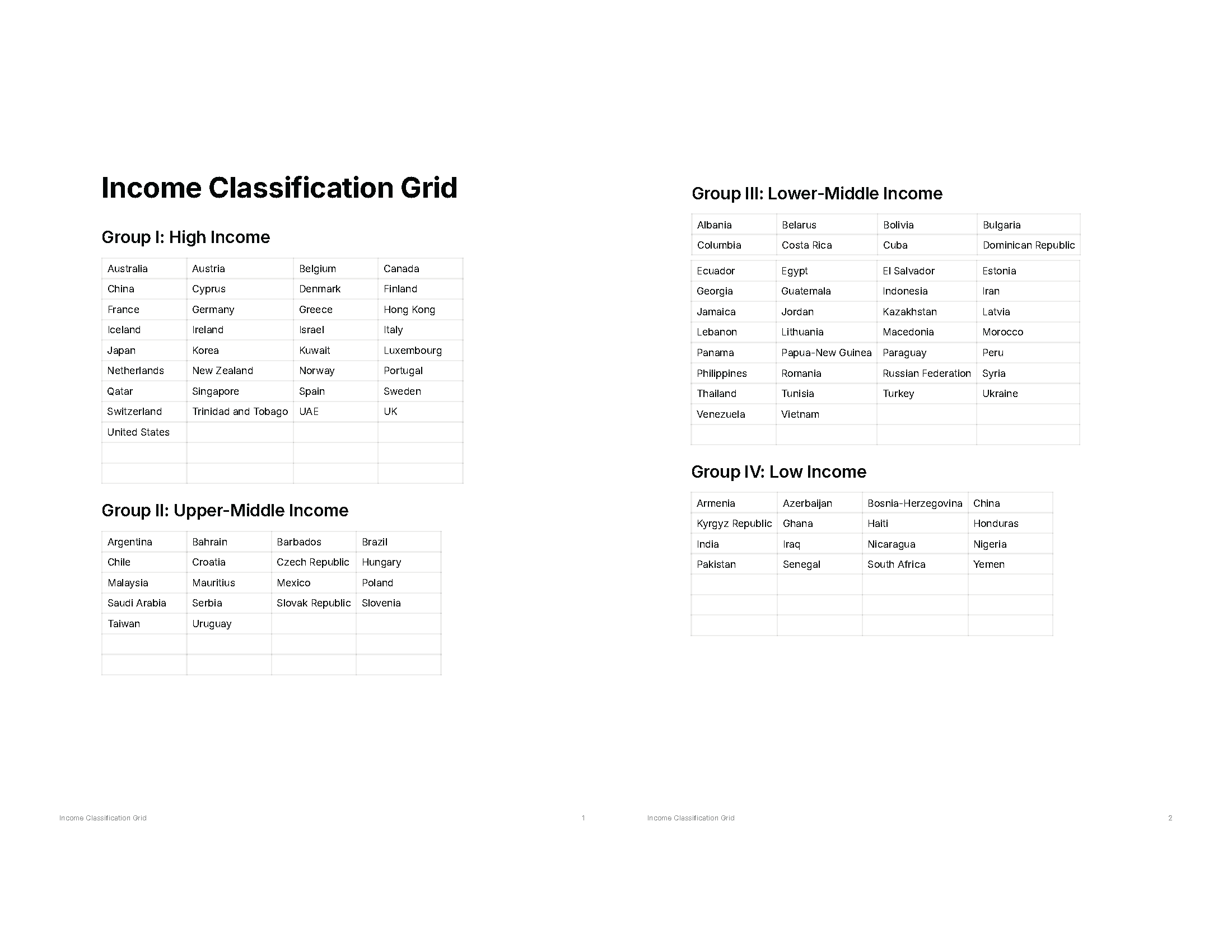
This revised fee structure was designed in line with the country groupings as used by the World Psychiatric Association. We believe it is important to be able to offer education, training, and certification more affordably.
If you are currently *residing* in any of the following countries *and* earning wages in the local currency *and* offering services to the local residents, then please use the country pricing table below:
Please check the Country List to see where your country is listed and then you may refer to the fee schedule below.
Please send proof of residence and local employment to Tyler: [email protected]
If your country is one of the ninety countries not listed, please contact Tyler: [email protected]
Group I Full Course Fees are $300.
Group II Full Course Fees are $225.
Group III Full Course Fees are $150.
Group IV Full Course Fees are $75.
If you live in a country outside of Group 1, please contact [email protected] and we will be happy to assist you!
6 CE Hours Per Part (APA, NYS, ASWB, NBCC)*
18 CE Hours for Full Course (APA, NYS, ASWB, NBCC, CPD)*
Course Fee Per Part: $179
Full Course: $449
Pricing without CE Hours:
Course Fee Per Part: $120
Full Course: $300
Launching April 28, 2026
CE's are provided for the "live" sessions only. CE's will not be available for the recordings.
We will honor cancellation requests submitted by email [email protected] if an attendee cancels at least 7 Days in advance.
Cancellation requests submitted after the above dates will not be accepted. There will be a $25 fee taken out of all refunds issued.
Sign up with your email to receive news and updates.